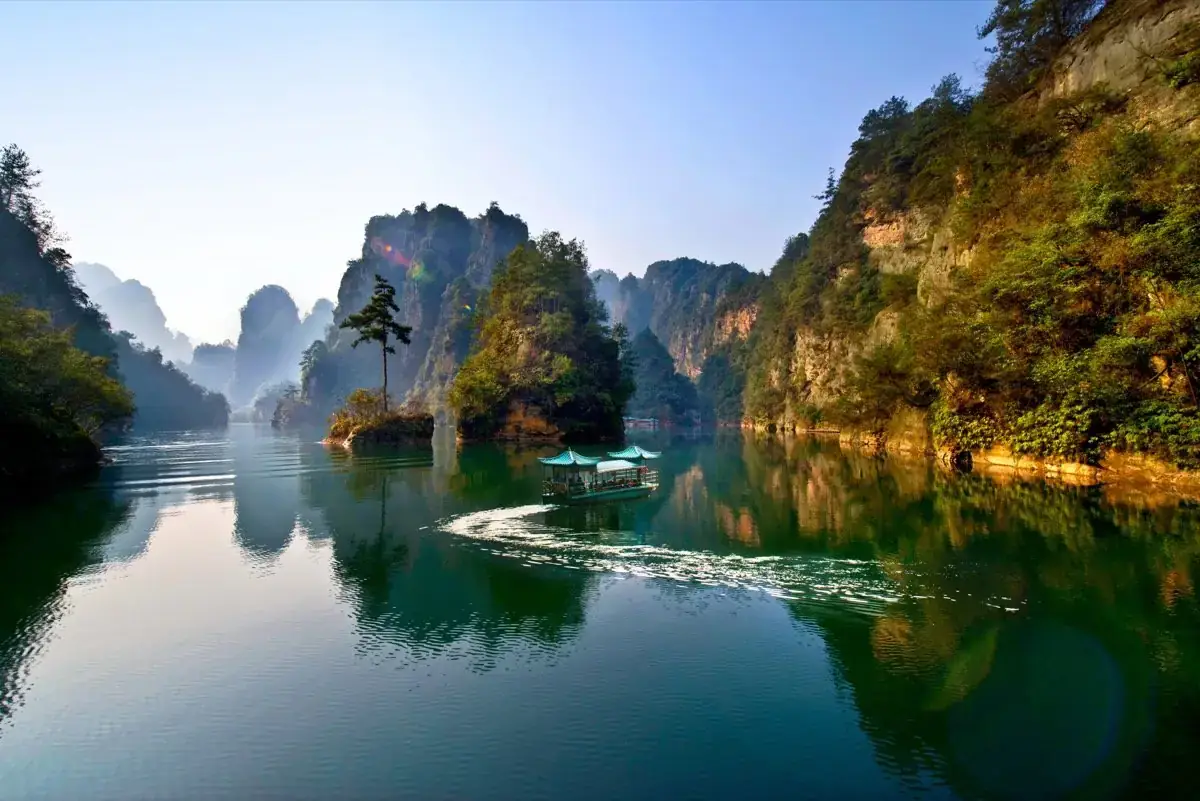
Zhangjiajie has a humid subtropical mountain climate: warm, wet summers and cool, misty winters. The pillars look dramatic in every season, but the experience changes a lot — especially when fog rolls in and closes the viewpoints. This guide breaks it down month by month.
The short version
- Best overall: April–May and September–October (mild, photogenic, manageable crowds).
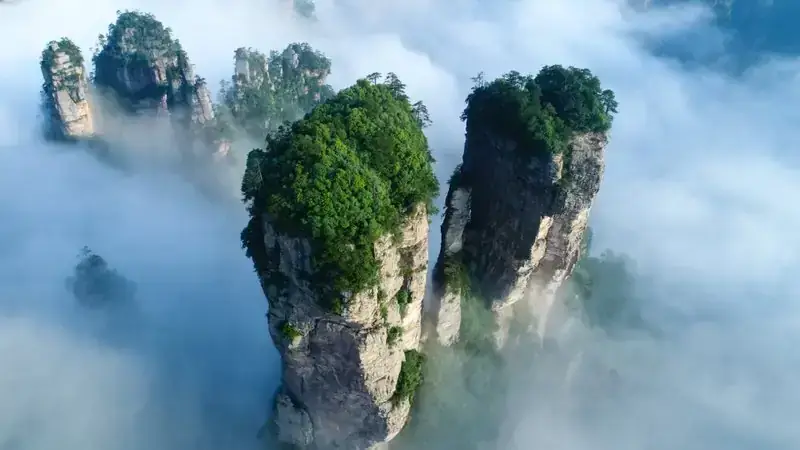
- Best for sea of clouds: mornings after rain, year-round.
- Best value / fewest crowds: November–March (cool, some mist, cheaper hotels).
- Avoid: the first week of May and Oct 1–7 (National Day) — prices and crowds peak.
Month by month
March–May (spring)
Warm, lush, and often misty — the classic “ink painting” weather. April–May is peak photography season for sea-of-clouds shots after rain. Pack a light shell; trails can be damp.
June–August (summer)
Hot and humid (30°C+), with afternoon thunderstorms. Crowds are moderate, but July–August school holidays spike. The forest trails stay cool; do exposed viewpoints early.
September–October (autumn)
The most comfortable temperatures and clearest air. The autumn color on Tianzi Mountain is spectacular. The National Day week (Oct 1–7) is the busiest, priciest window of the year — go the week before or after.
November–March (winter)
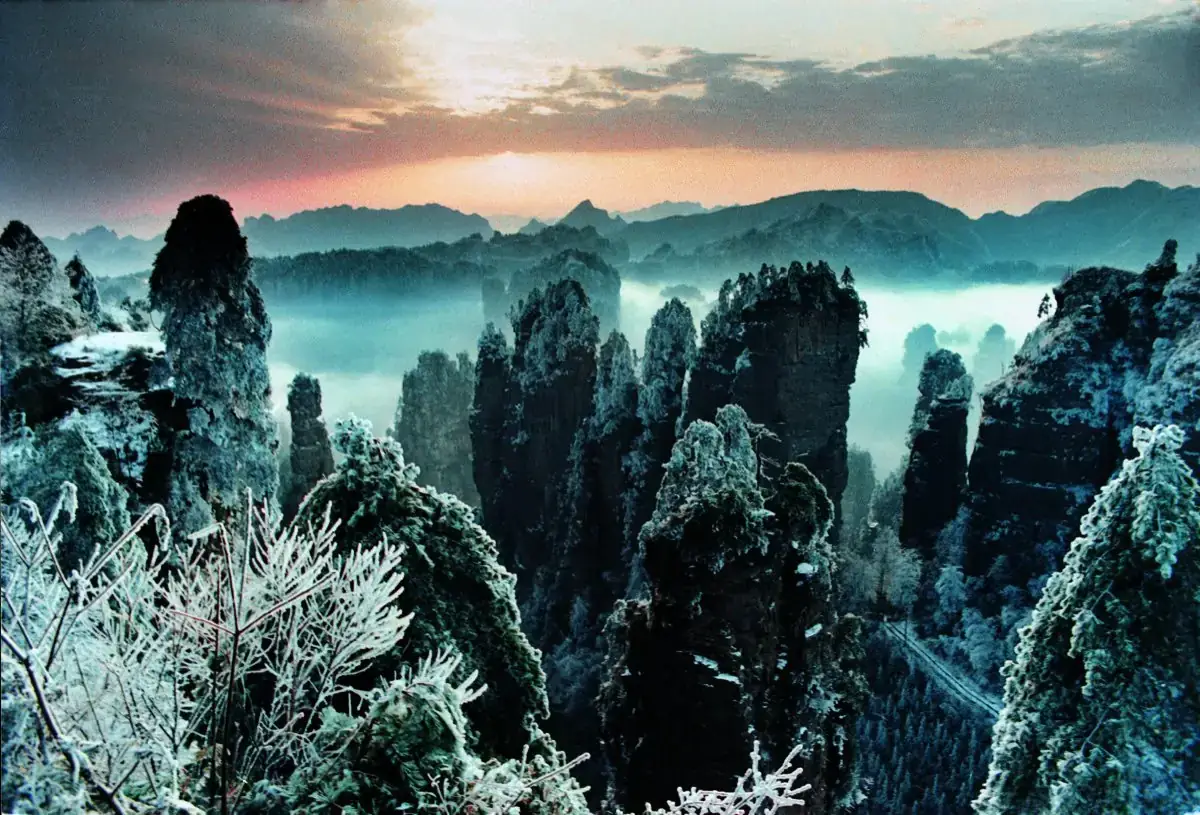
Cool (5–15°C), quiet, and atmospheric. Some mist on the peaks; occasional light snow. Hotels are cheapest. The park feels almost private on weekday mornings.
If you only have one trip
Target mid-April to mid-May or mid-September to late September. You get the scenery at its best without the holiday-week chaos. Tell our local team your dates and we will shape the itinerary around the weather.
What “best” depends on
- Photography → Apr–May mist or late-Sep clear skies.
- Fewer crowds + low cost → Nov–Mar.
- Family summer break → Jun–Aug, start early, embrace the rain.